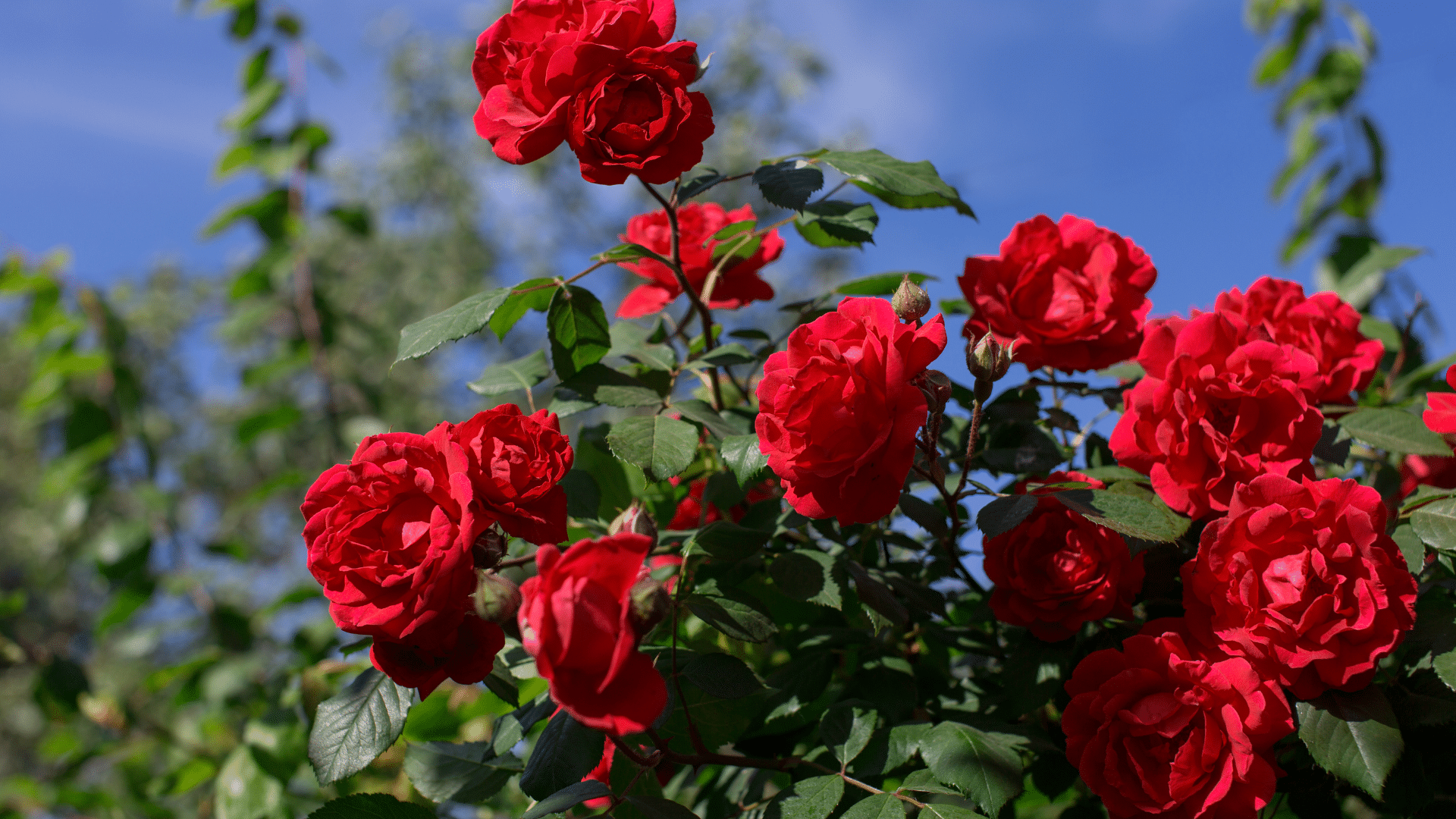
Roses have a long, colorful history and have been cultivated for over 5,000 years. Modern roses, introduced in 1867, include popular types such as hybrid teas, climbers, rugosa, and, in our region, hardy shrub roses like Knock Out, Drift, and Carpet roses.
Water
Newly planted roses need about ½ inch to 1 inch of water per week, while established roses require 1 to 2 inches. Begin watering in spring or immediately after planting, applying water deeply at one time rather than in frequent shallow amounts. Always water at the base to keep foliage dry and reduce disease risk.
Soil type will affect watering needs; sandy soils dry out faster than clay. During hot or dry periods, watering may be needed two to three times per week. Avoid overwatering, which can cause yellowing and leaf drop. When in doubt, check soil moisture a few inches below the surface before watering.
Mulch
The application of mulch helps retain moisture, regulate soil temperature, reduce erosion, and suppress weeds. Keep mulch a few inches away from the base of the plant to prevent excess moisture buildup. In late November, apply additional mulch or fallen leaves for winter protection, and then remove it in early April.
Pruning Roses
Major pruning should be done in spring as buds begin to swell, making it easier to identify live and dead wood. Avoid heavy pruning after September, as it can lead to winter injury. Remove old, damaged, or weak canes to improve air circulation and encourage new growth.
Established plants can have up to one-third of their canes removed. Light shaping and deadheading can be done throughout the season. Shrub roses will rebloom with minimal care, while hybrid teas should be pruned back to the first set of five leaflets after flowering to encourage repeat blooms.
Fertilizing Roses
Roses are heavy feeders and benefit from regular fertilization. Start in spring once new growth is established, apply again at first bloom, and continue feeding every 2 to 3 weeks with organic fertilizers or monthly with synthetic options. Always follow label directions and water in thoroughly. Stop fertilizing by mid-August to allow plants to harden off and prepare for winter.