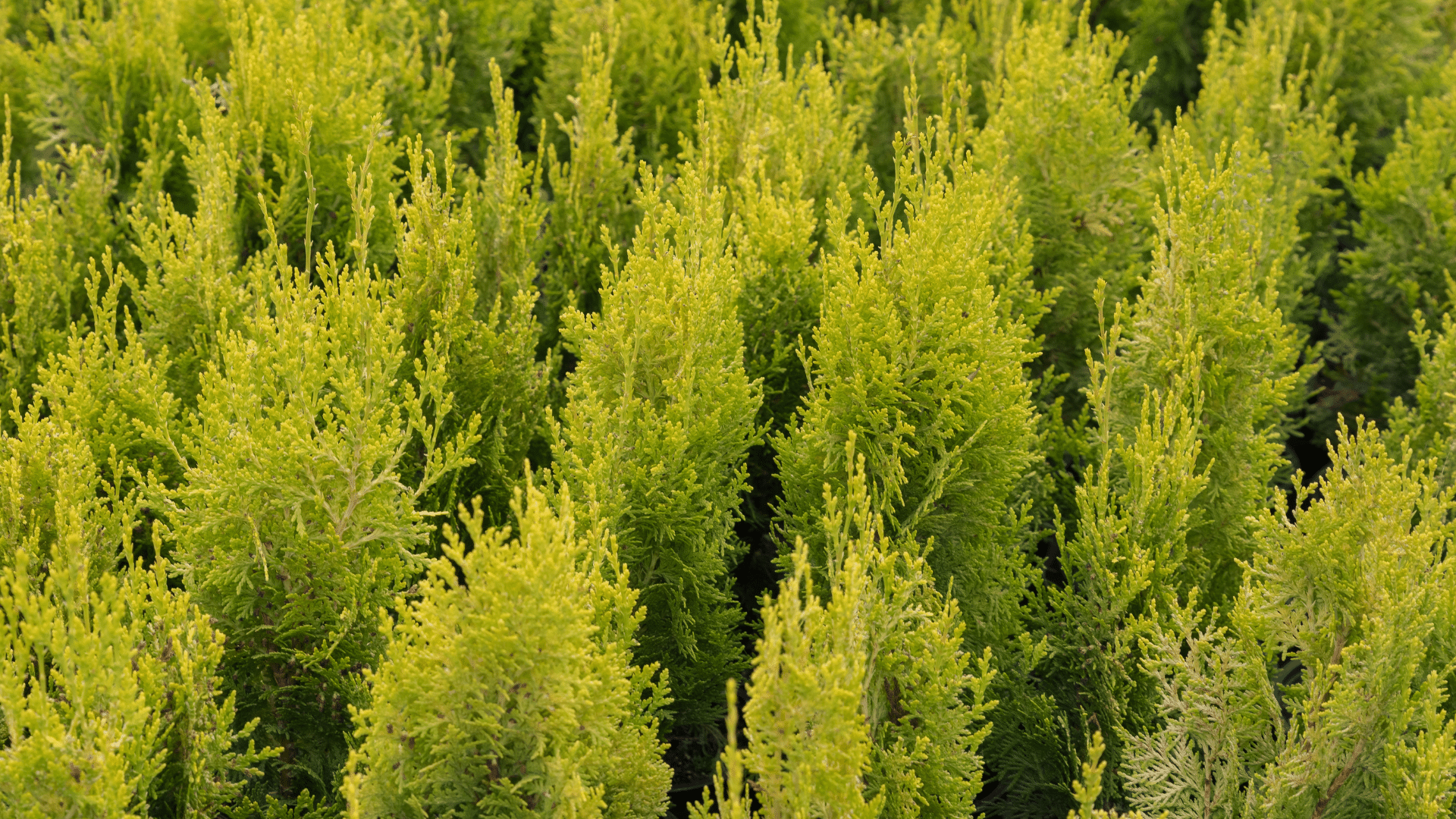
Thuja occidentalis ‘Smaragd’ or ‘Emerald Green.’ Developed in Denmark 1950
Zone – 3 – 8
Growth – Grows 3’- 4’ wide 10’- 15’ high in a pyramidal shape. Once established, growth rates average 10”- 12” a year.
Uses – Spacing
Hedge, privacy screen, foundation plant, and specimen. When used as a screen, the spacing should be 3’ center to center, as they will grow into one another. Used as a hedge with space in between individual plants, either in a single row or scattered row, spacing can be 4’-5’ center to center. If the distance to cover is 30’, then 3’ spacing will require (10) plants. Start 2’ from both ends since the arborvitae grows 4’ wide in all directions. This is also the distance from the fence or property line to the center of the root ball. Keeping this in mind, you will only need 9 plants for the 30’ distance, accounting for 2’ on each end.
Exposure – Placement
Full sun to part shade, 4-6 hours of sun is ideal. Will tolerate more sun with moisture added. If planted in shade, with less than 4 hours of sun, the density of foliage will be reduced. Place in a location protected from winter winds, including backyards against fences or near the house. If placed in an open, wind-exposed area or by the street, wrap in burlap for the first few winters.
Soil
Any soil is fine, but it needs to be well-drained. Adding mushroom compost or soil amendments such as One Step will help break down our local clay soils. Emerald Green arborvitae prefer moist soil, neutral in pH, and do not require acidic soil.
Watering Emerald Greens
The soil should be moist but never waterlogged. Newly planted Emerald Green arborvitae require weekly watering depending on rain. The gallons of water needed each week are equal to the height; a 6’ plant needs 6 gallons of water a week. Water until December for winter moisture. Once established, typically after a year, arborvitae require water only during times of drought. Overwatering is the number one killer of arborvitae.
Emerald Green Fertilization
A yearly compost or an organic, non-acidic fertilizer once the plant is established. Consider mushroom or cotton burr compost, Espoma Tree Tone, or Plant Tone.
Pruning
Trim slightly in leafy areas and not older bare branches to shape if needed in mid-May. Broken branches from animals or winter snow damage can be pruned at any time.
Problems with Emerald Greens
Insects: bagworms, spider mites, and scale. Diseases: tip blight, botrytis, and canker. Environmental: Drought, flood, winter burn or dehydration, freezing temperatures. Seasonal Shedding: Not a problem, but a concern for many. It is natural for arborvitae to shed their inner leaves every 2 to 3 years in the fall.