Natural stone has a way of making a landscape feel established from day one. Whether it is used to create a retaining wall, frame a planting bed, build natural steps, edge a water feature, or add a focal point to a garden, stone brings texture, permanence, and a natural character that manufactured materials can only try to replicate. When you start comparing natural stone options, the terminology can get confusing quickly. Outcropping, ledgestone, character boulders, one-two man stone, pallet size, 5-8 inch material, 6-12 inch material… each term helps describe how the stone is shaped, sized, handled, or used.
Here is a practical breakdown of the most common terms used when talking about outcropping stone, boulders, and related natural stone products.
Outcropping Stone
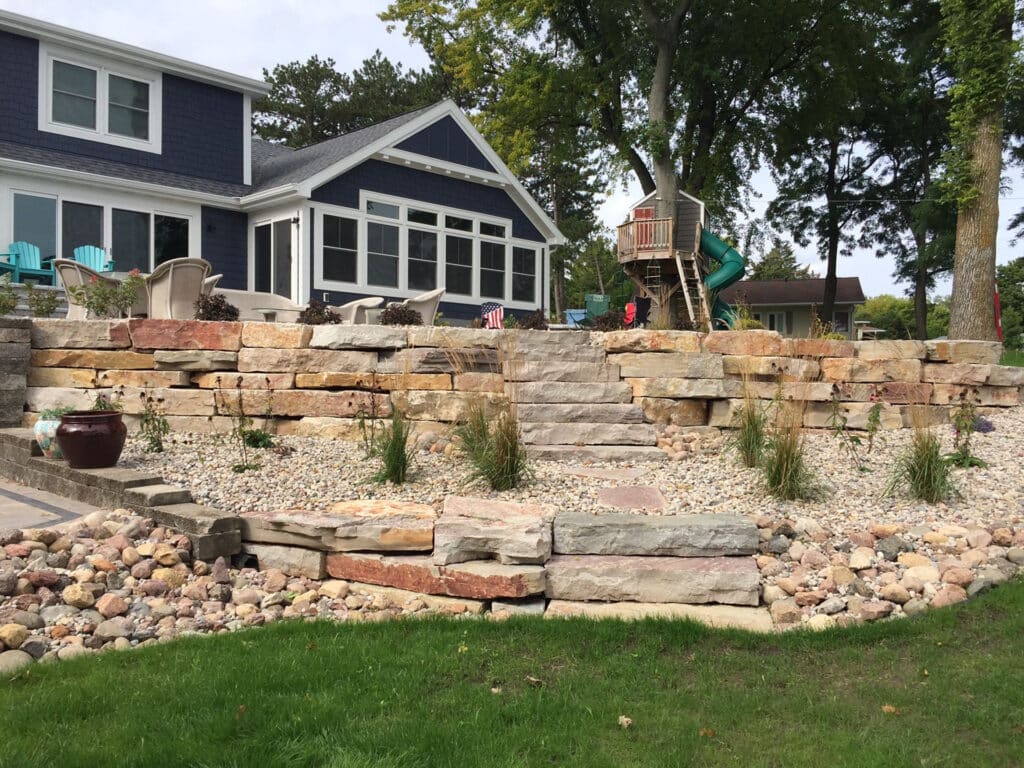
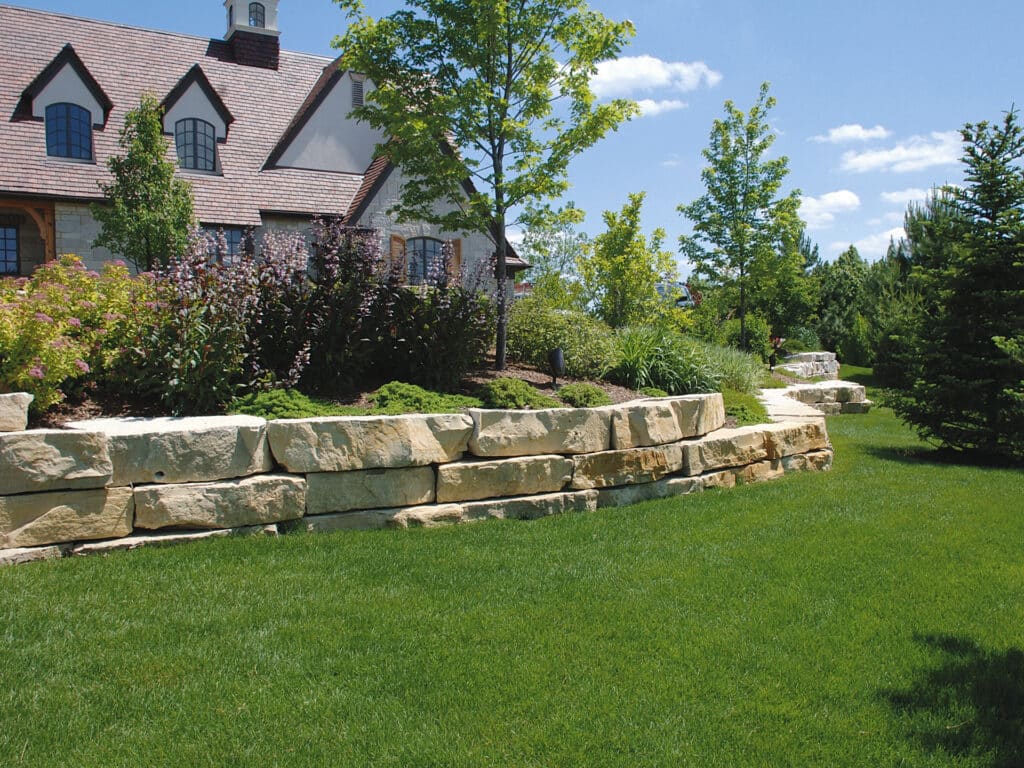
Outcropping stone refers to large, naturally layered slabs of stone that look like they are emerging from the ground. In nature, an outcrop is an exposed rock formation. In landscape construction, outcropping stone is used to recreate that same natural, layered look in a controlled, buildable way.
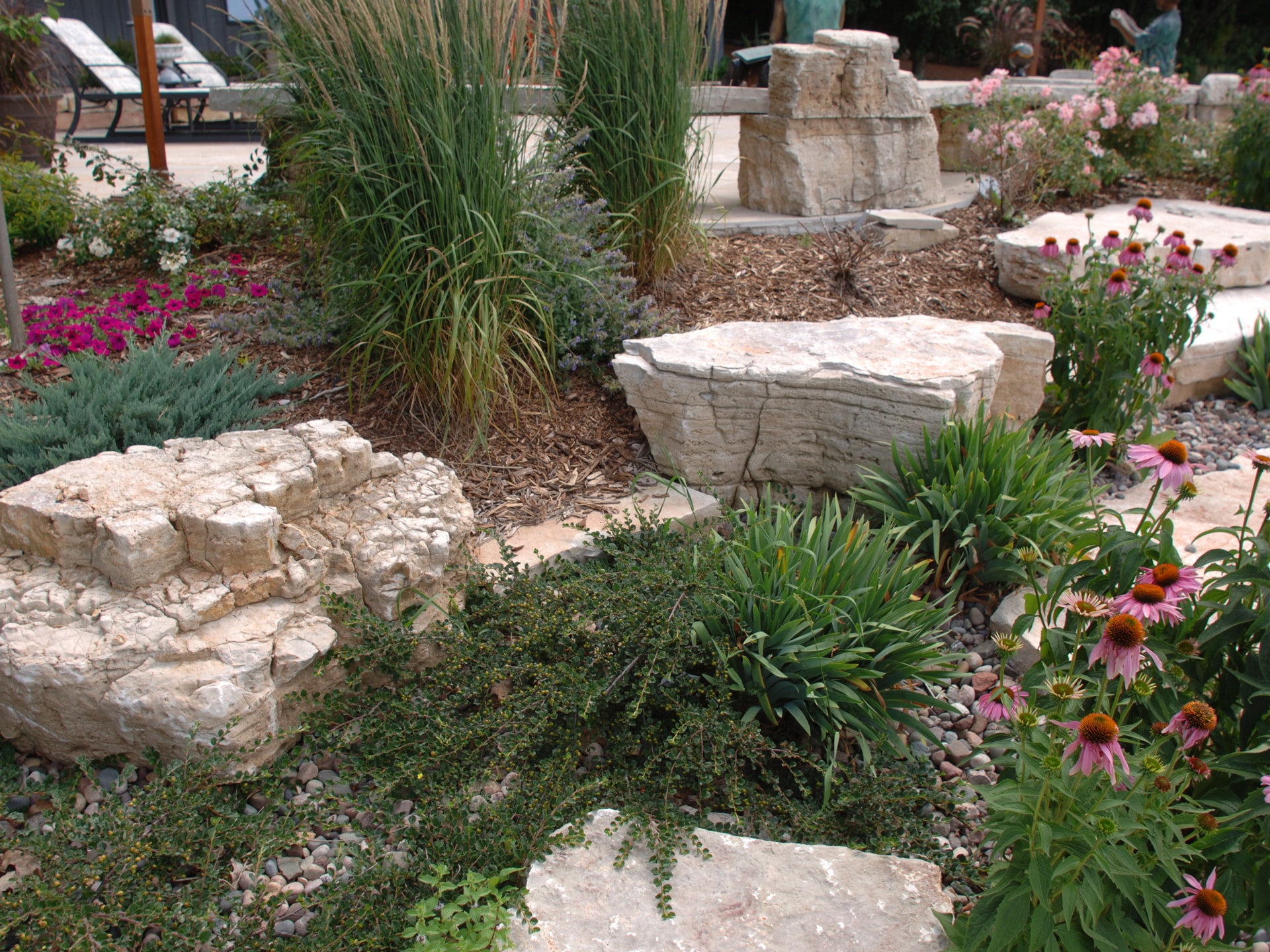
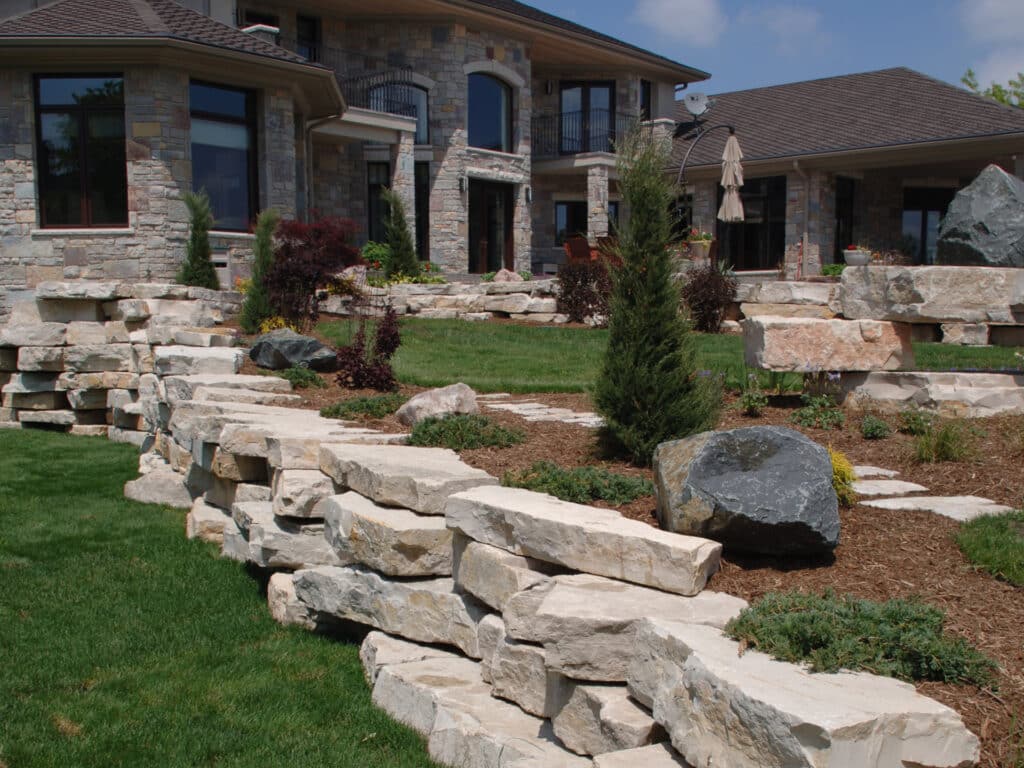
Most outcropping stone is limestone, sandstone, or granite, though depending on the part of the country you live in, there may be other similarly durable natural stone options. The pieces are typically irregular in shape, with natural edges, varied surface texture, and visible layering. Because each piece is different, outcropping is often used where the goal is to create a more organic wall or landscape feature in place of a perfectly uniform, block-style installation.
Outcropping is commonly used for retaining walls, raised planting beds, natural seating areas, shoreline work, water features, grade transitions, and large-scale landscape accents. For example, a weathered limestone or sandstone outcropping can help create the look of a natural bluff or exposed rock ledge, while granite outcropping can provide a heavier, more rugged appearance.
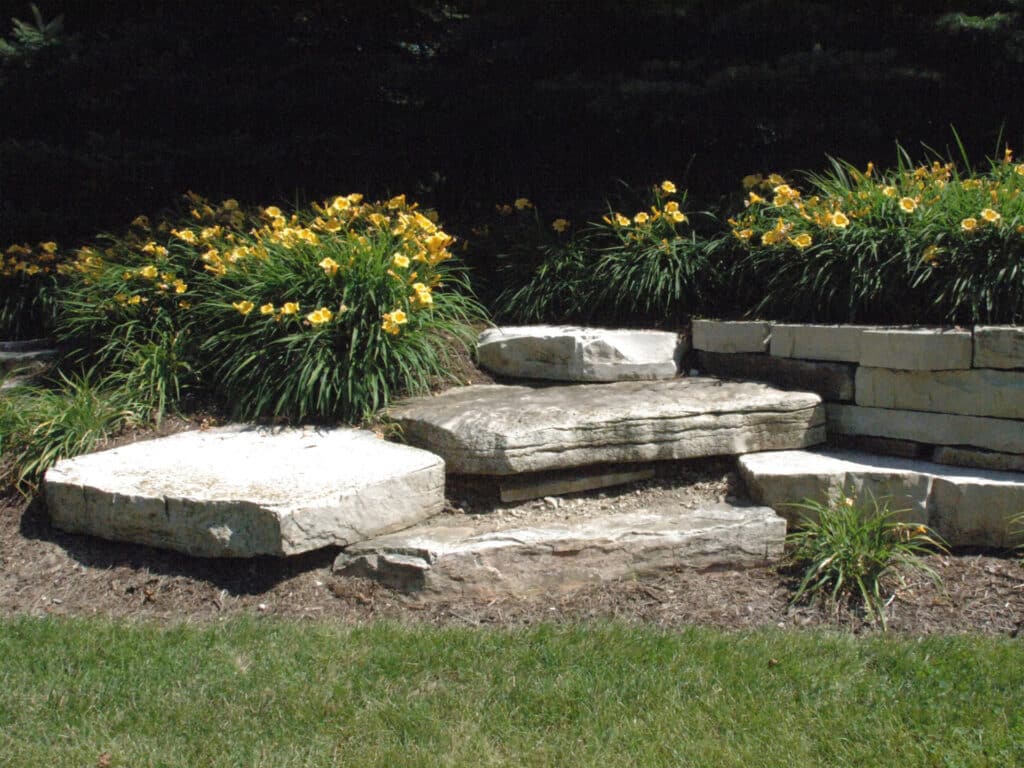
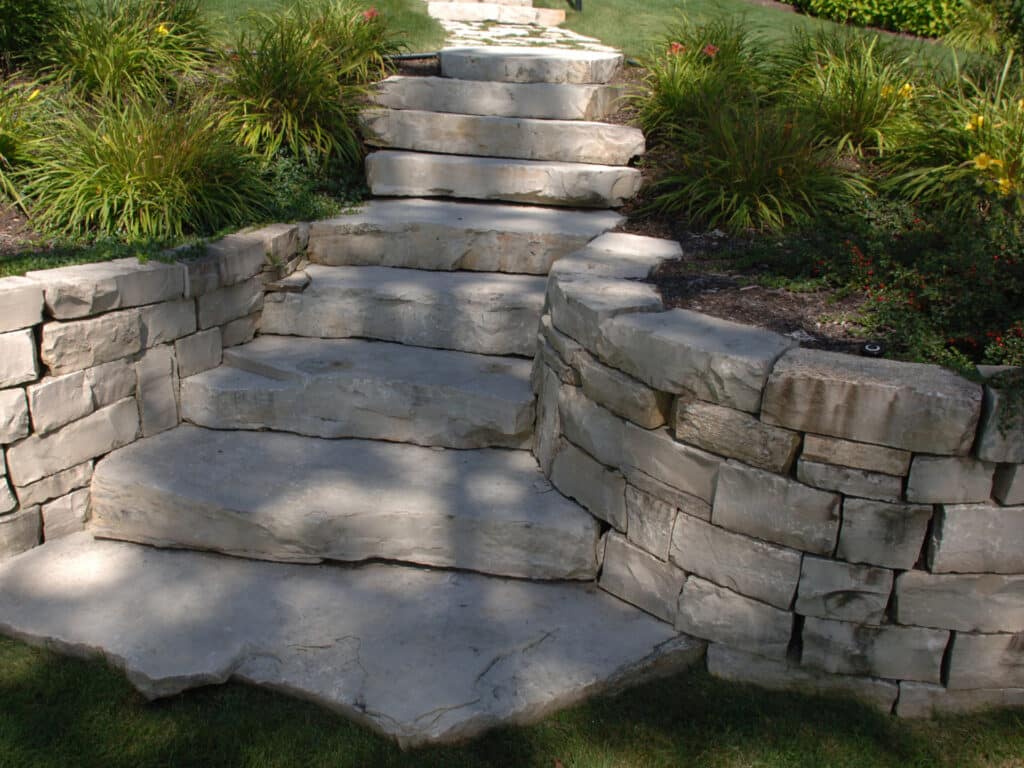
Outcropping can also be used for natural stone steps. In these applications, the stone needs to provide a stable, walkable surface with enough depth for a comfortable tread and a consistent rise between steps. While general outcropping can sometimes be used, step material is often more selectively sorted to ensure flatter surfaces, appropriate thickness, and usable dimensions. Longer, wider pieces are typically preferred so each step feels solid and intentional rather than pieced together.
One-Two Man, Two-Three Man, and Bobcat Outcropping
Some stone yards use older handling terms like one-two man, two-three man, bobcat, or pallet size. These terms generally describe how large or heavy the outcropping pieces are, based on the type of labor or equipment typically needed to move them.
One-two man outcropping is usually up to approximately 150 pounds. These pieces are still heavy, but they may be movable by one person with the right tools and technique.
Two-three man outcropping is typically around 150 to 400 pounds. These pieces usually require multiple people, equipment, or both.
Finally, bobcat or pallet-size outcropping is generally 400 pounds and up. These stones almost always require machine handling, especially when moving, unloading, or setting them accurately on a jobsite.
These are not universal standards. Actual ranges can vary by quarry, supplier, material, and stone shape. A long, flat stone may handle differently from a compact piece of the same weight. Dense materials like granite can also weigh more than a similarly sized piece of sandstone or limestone.
Common Outcropping Thicknesses
Outcropping stone is often sorted by thickness. Two common groupings are 5-8 inch and 6-12 inch material.
The thickness affects both the look and the buildability of the stone. Thinner pieces can create a tighter layered look, while thicker pieces can provide more mass and visual weight. For retaining walls and grade transitions, thickness also influences how the pieces stack, how much coverage is achieved, and how the wall feels in scale with the surrounding landscape.
Lengths vary widely. It is common for outcropping pieces to range from approximately 2 feet to 10 feet or more, depending on the material and quarry. Because outcropping is a natural product, the length, depth, face height, and shape will vary from piece to piece.
For step applications, thickness plays an even more important role. Each piece needs to provide enough height to create a consistent rise while also offering a stable, flat walking surface. In many cases, contractors will select or sort outcropping specifically for steps to ensure better consistency in tread depth and overall usability.
Boulders
Boulders are large individual stones used throughout the landscape. They may be rounded, angular, flat, weathered, or irregular, depending on the material and where it was quarried. In general stone-yard language, boulders are often considered any individual stone larger than roughly 10 inches in diameter, though exact sizing can vary by supplier or quarry.
Boulders are used differently from outcropping. While outcropping is often installed in layers to form walls or grade transitions, boulders are frequently placed as accents, barriers, edging, water feature stone, slope stabilization, or standalone focal points. They can also be grouped together to create a more naturalistic setting.
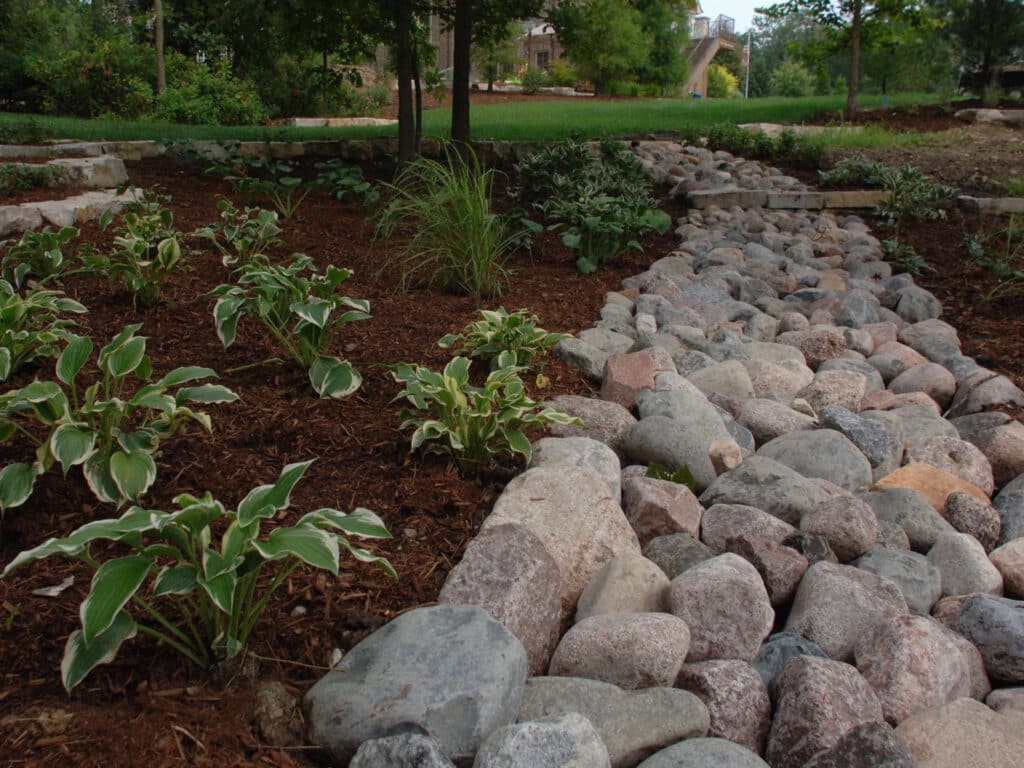
Smaller boulders may be used around plantings or water features, while larger boulders can anchor an entire landscape bed or serve as a dramatic specimen stone. Granite boulders, for example, are a popular choice because of their durability, range of colors, and naturally rounded or weathered appearance.
Common Boulder Size Groupings
Boulders are commonly sorted by approximate diameter or size range. While each supplier may grade material differently, common boulder sizes include 4-8 inch, 8-12 inch, 12-18 inch, 18-24 inch, and 24-36 inch groupings.
Because boulders are irregular, these sizes should be treated as approximate. A flat 18-inch stone may weigh much less than a round 18-inch stone. Material also matters. Granite is typically heavier than limestone, and limestone is typically heavier than sandstone.
The following guide can help visualize common boulder sizes:
| Boulder Size | Easy Size Comparison | Approximate Weight Range | Common Landscape Uses |
|---|---|---|---|
| 4-8 inches | Grapefruit to small melon | 5 – 30 lbs | Pond edges, planting bed accents, groundcover transitions, and small decorative groupings |
| 8-12 inches | Basketball to beach ball | 30 – 100 lbs | Garden borders, water feature edges, accent groupings, and small retaining accents |
| 12-18 inches | Large beach ball to small ottoman | 100 – 300 lbs | Planting bed focal points, slope accents, pond, and waterfall work |
| 18-24 inches | Small ottoman to yoga ball | 300 – 700 lbs | Larger focal points, commercial landscape accents, natural barriers, and water features |
| 24-36 inches | Yoga ball to bean bag chair | 700 – 2,000+ lbs | Statement boulders, entry features, traffic control, and large-scale landscape anchors |
These ranges are meant as a planning guide, not a guarantee. Actual weights depend on the stone type, shape, density, and moisture content. Larger boulders almost always require machine handling for safe delivery and placement.
When choosing a boulder size, it is important to think about scale. A 12-18 inch boulder may look substantial on a small residential walkway, but it can disappear visually in a large commercial landscape or broad planting bed. In open spaces, larger boulders or grouped boulders often create a more balanced look.
Character Boulders
Character boulders are stones with extra personality. These pieces may have unusual weathering, holes, visible stratification, unique shapes, dramatic color variation, or textures that make them stand out.
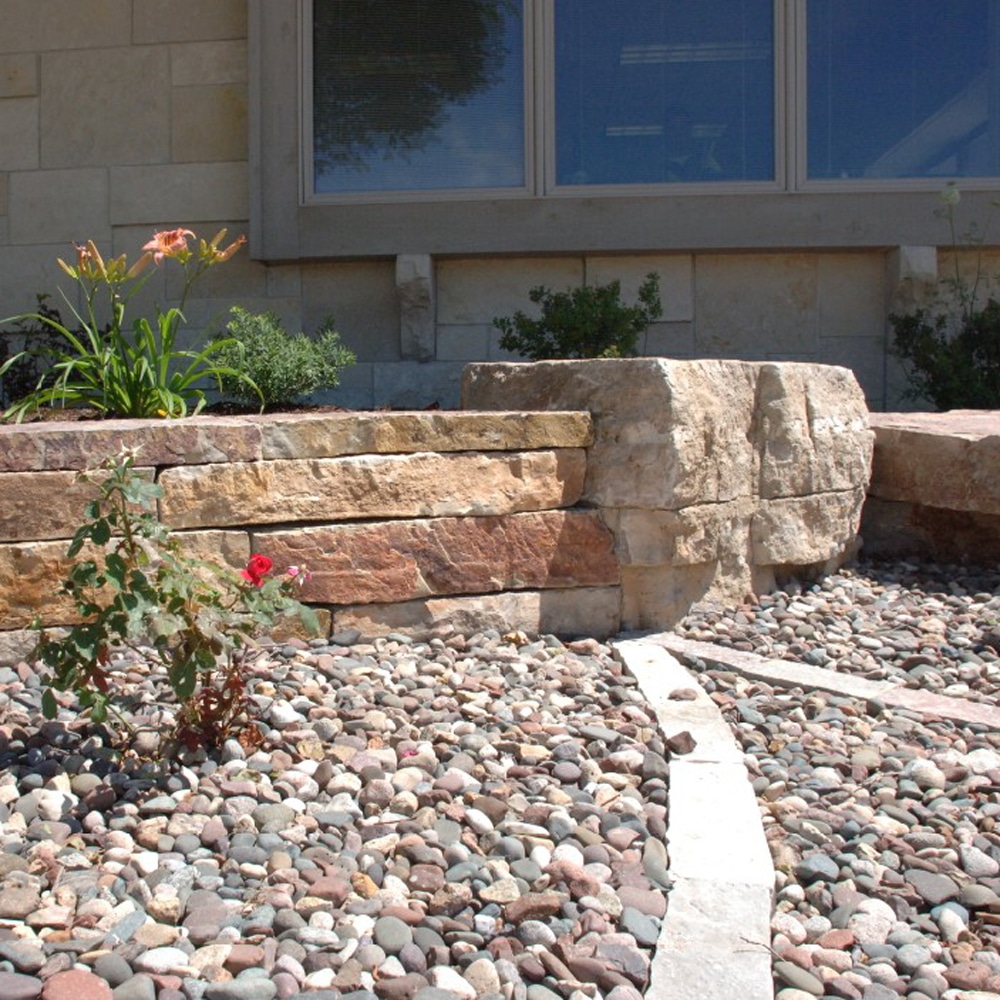
Because of those features, character boulders are often used as focal points rather than background material. A single character boulder can become the centerpiece of a garden bed, the anchor of a front entry planting, or a visual stopping point along a path. They are also popular near water features, where natural holes, ledges, and weathered surfaces can make the stone feel like it has always been there.
When selecting character boulders, it helps to think less about exact size and more about visual impact. Shape, color, texture, and placement matter just as much as the dimensions.
Stone Weight by Material
Natural stone is sold and handled based heavily on weight. Understanding approximate weight helps with estimating, delivery planning, equipment needs, and installation.
As a general guide, sandstone weighs approximately 150 pounds per cubic foot, limestone weighs approximately 165 pounds per cubic foot, and granite weighs approximately 180 pounds per cubic foot.
That means two stones with similar dimensions can have noticeably different weights depending on the material. Granite is typically denser than sandstone, so a granite boulder may require more equipment capacity than a sandstone boulder of the same size.
Weight also affects jobsite logistics. Before ordering or installing large boulders and outcropping, it is important to consider access, unloading area, machine capacity, soil conditions, and final placement. A stone may be the right size visually, but if equipment cannot safely reach the installation area, the project may require a different handling plan.
Choosing the Right Stone for the Project
The best stone choice depends on the design goal, site conditions, and installation method.
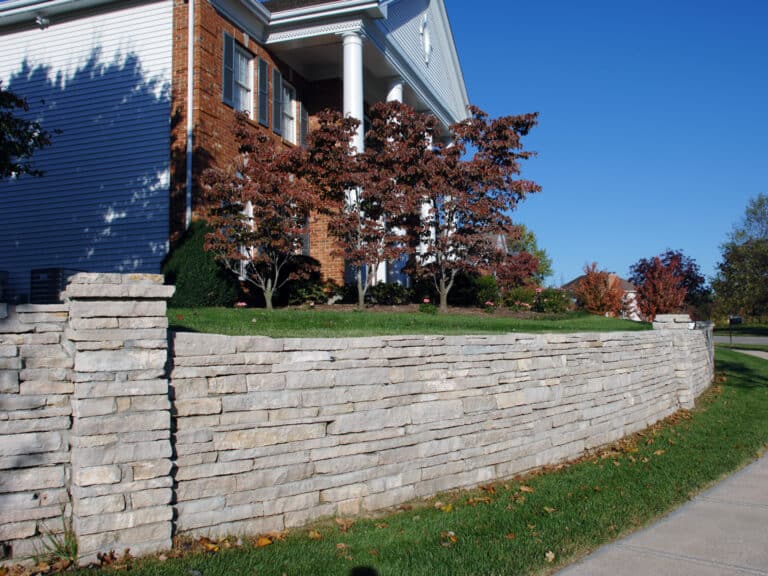
For natural retaining walls, outcropping or ledge-style stone is often a strong choice because the pieces can be layered to create a stable, natural-looking wall. Larger pieces help create visual mass, while flatter pieces can make stacking easier.
For focal points, character boulders or larger individual boulders are often more effective. Look for interesting shape, weathering, color, and surface texture.
For water features, boulders and outcropping with natural edges, holes, pockets, or layered faces can help the feature feel more organic. Weathered limestone, sandstone, and unique character stones are often good candidates.
For steps, look for stone that has been specifically sorted or selected for step use. Consistent rise and tread depth matter more here than they do in a general wall application.
For garden accents and planting beds, smaller boulders or grouped stone can add structure without overpowering the plant material.
Final Thoughts
Outcropping stone, ledgestone, boulders, and character boulders all bring a natural look to the landscape, but they are not all used the same way. Understanding the terminology makes it easier to compare products, plan for equipment, estimate weight, and choose the right stone for the project.
Because natural stone varies by quarry, material, and individual piece, exact sizing and appearance will always have some variation. That variation is part of what makes natural stone so valuable in the landscape. No two pieces are exactly alike, and when selected well, the finished project feels grounded, permanent, and unique.
Whether you are building a retaining wall, selecting a statement boulder, creating a water feature, or planning a natural stone stairway, knowing these common terms can help you choose material with more confidence.
Explore Lurvey’s Boulders & Outcropping selection to compare natural stone options by material, size, color, and application.